Walks in Dreams
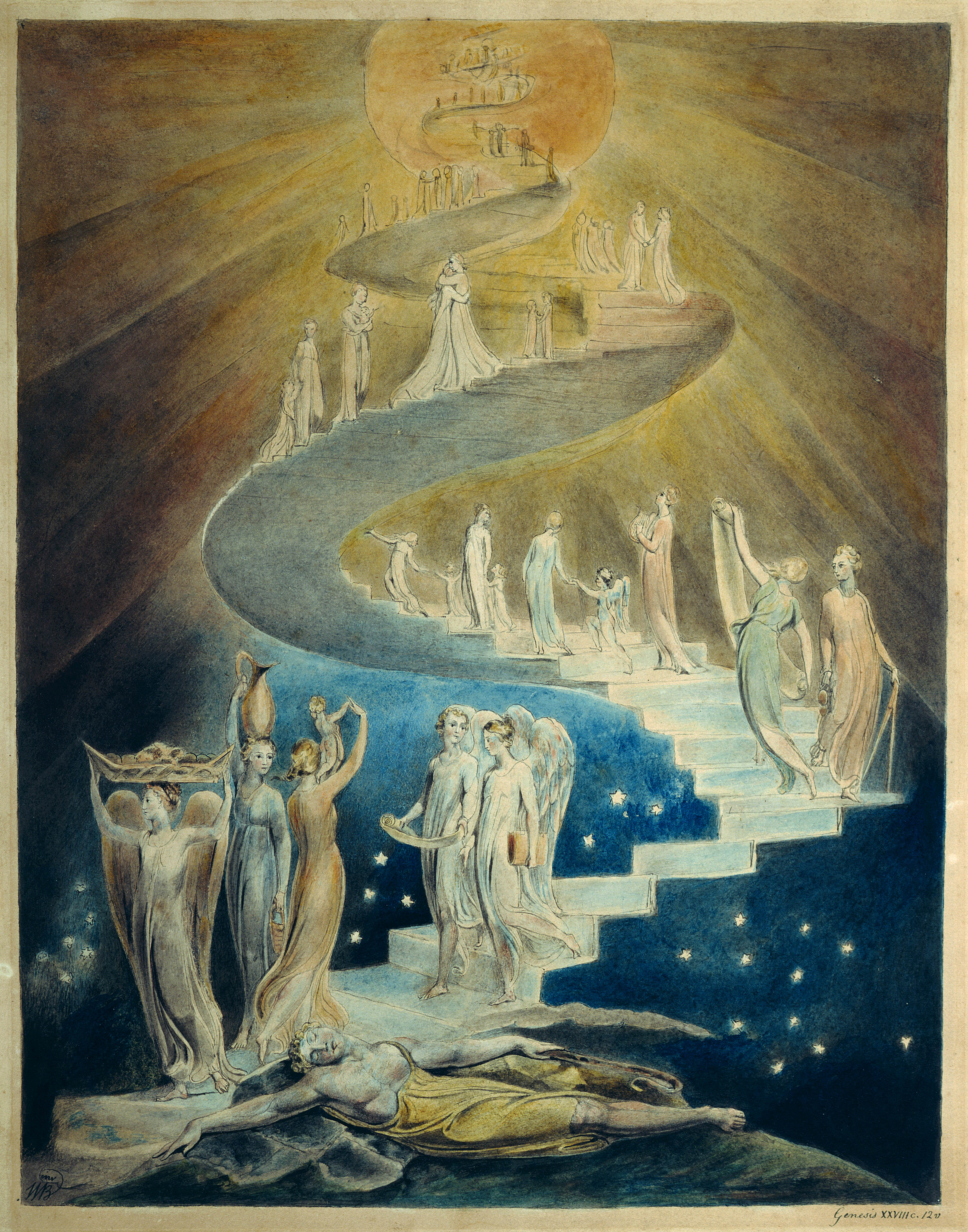
When the lights go out and the waking mind steps back, you step forward. You pass into the country that most people visit only by accident, and you move through it as though the geometry were obvious. You enter the dreams of sleepers, walk between their rooms, carry messages across distances the waking world insists are impossible. What you do there is real in both directions: what you learn in the dream is true when you wake, and what you bring back from the dream has weight.
Connection: Choose one of the following.
- Pick one other PC. They have, at least once, found you inside one of their dreams. What they do about it is still being worked out between you.
- Pick one other PC. You share a recurring dream with them, one that neither of you initiated and neither of you can fully interpret. You have each noted the details separately; the notes agree more than they should.
- Pick one other PC. When they sleep within immediate range of you, both of your recoveries are faster: the ten-hour recovery roll takes only four hours for each of you.
- Pick one other PC. Something in the Dreaming has taken an interest in them, and for reasons neither of you can name, your presence in their dreams holds that thing at bay.
Additional Equipment: A dream journal already in use, with more entries than you entirely remember writing, and a small personal object (a ring, a charm, a folded photograph) that you take with you into sleep as an anchor to the waking self.
GM Intrusion: A dream you entered is not a dream. The sleeper wakes in the middle of your walk and remembers you with unwanted precision. Something you carried in from the Dreaming has not quite let go of you and is audible, or visible, or affecting events in the waking scene.
Geas: The Dreaming is not a neutral country. Every night you spend there, something in the country notices, and the attention accumulates. You must sleep at least four hours in every twenty-four: if you do not, your abilities from this focus are hindered by two steps until you do, and the accumulated attention expresses itself in the next dream as an intrusion the GM is free to shape. You have an inability on tasks involving staying awake past the ordinary endurance of a mortal body, and on tasks involving preventing yourself from dreaming at all.
Minor Effect Suggestion: A small, useful detail surfaces in the dream: a name, a place, an image you did not ask for but needed.
Major Effect Suggestion: A sleeper who witnesses your presence in their dream wakes unable to act against you for the next round, trying to reconcile what they just saw.
Tier 1
Sleeper’s Ear: You perceive sleepers within short range of you: how many, their approximate condition, and whether any of them is dreaming unusually (nightmare, shared dream, supernatural intrusion, lucidity). You are trained in tasks involving putting people to sleep through mundane means, reading their dream states when they sleep near you, and recognising someone else’s dream-signature. Enabler.
Dream-Step (2 Intellect points): You briefly pass into and out of the Dreaming. You disappear from one location within long range and reappear in another within long range that you can see, or that you have visited within the previous hour. To observers the movement reads as a blink: present, gone, present again. Action.
Tier 2
Walk the Dreaming (3 Intellect points): While you sleep, you enter the dream of a specific sleeper you can identify by name, face, or personal item within a distance the GM determines (typically the same city for someone you know well, further if you have a strong anchor such as blood kinship or a shared dream-signature). Inside the dream, you can observe, speak with the dreamer, and attempt to influence or interpret dream content. Actions inside the dream take dream-time; you emerge with the memory intact and no loss of your own sleep. If the dreamer wakes while you are present, the connection ends. Action to initiate (requires sleep).
Tier 3
Ability Choice. Choose either Lucid or Dreamwalker’s Sense as your tier 3 ability.
Lucid: You are always aware, within a dream, that you are dreaming: your own dreams are fully controllable for ordinary mundane purposes, and you are trained in all Intellect defence tasks against effects that operate through sleep, dream, or altered states of consciousness. Within another’s dream, you are trained in tasks involving shaping or contesting what occurs there. Enabler.
Dreamwalker’s Sense: You perceive the residue of dream-workings in the waking world, and the residue of waking-world events on the dreams of those who witnessed them. You are trained in tasks involving identifying whether someone has been walked in their sleep, reading a location that has recently been used for sleep-based rituals, or tracking a sleeper across the boundary between dream and waking. Enabler.
Tier 4
Ability Choice. Choose either Shape the Dream or Shared Sleep as your tier 4 ability.
Shape the Dream (4 Intellect points): Within a dream you have entered through Walk the Dreaming, you may impose a specific alteration: reveal a hidden truth to the dreamer, soothe an ongoing nightmare, plant a subtle suggestion that the dreamer will consider on waking (with an Intellect defence task to resist), or construct a scene that communicates information in a way the dreamer will remember. Major alterations that contradict the dreamer’s will permit a defence roll. Action to initiate within the dream.
Shared Sleep (4 Intellect points): You draw up to four sleeping creatures within immediate range into a single shared dream that you shape. Participants remember the dream clearly on waking; time inside the dream may run at up to roughly ten times waking speed, at your discretion, up to ten minutes of waking time. You may use this ability to conduct conversations, planning sessions, or rituals that the waking world would not permit. Action to initiate (requires sleep).
Tier 5
Restful Passage: Your sleep draws strength from the Dreaming. Your ten-hour recovery roll is instead a four-hour recovery roll, and you regain 1d6 additional points of your choice when you complete it. You also recover from one minor wound per full sleep cycle, at no cost. Enabler.
Tier 6
Ability Choice. Choose either Dream Sanctuary or Waking Nightmare as your tier 6 ability.
Dream Sanctuary (7 Intellect points): You construct a stable dream-location that persists between sessions of sleep, anchored to your own mind and open only to those you invite. Inside the sanctuary, time passes at your discretion (up to one day subjective for each hour of sleep spent there), wounds and pool losses are restored in full for any guest, and no external supernatural effect can reach the participants short of a level 8 working specifically targeting the sanctuary itself. You must sleep for at least four hours to open it; a guest must be sleeping to enter. Action to initiate (requires sleep).
Waking Nightmare (7 Intellect points): You pull a fragment of a target’s own recurring fears out of the Dreaming and place it around them, in the waking world, for one minute. The target within long range is hindered on all tasks by two steps for the duration and, on each of their turns, takes 4 points of Intellect damage (ignores Armour) as their deepest fear presents itself to them as real. Observers see nothing directly but notice the target’s behaviour. An Intellect defence task each turn reduces the damage by half and lifts one step of the hindrance for that turn. Action.