Character Types
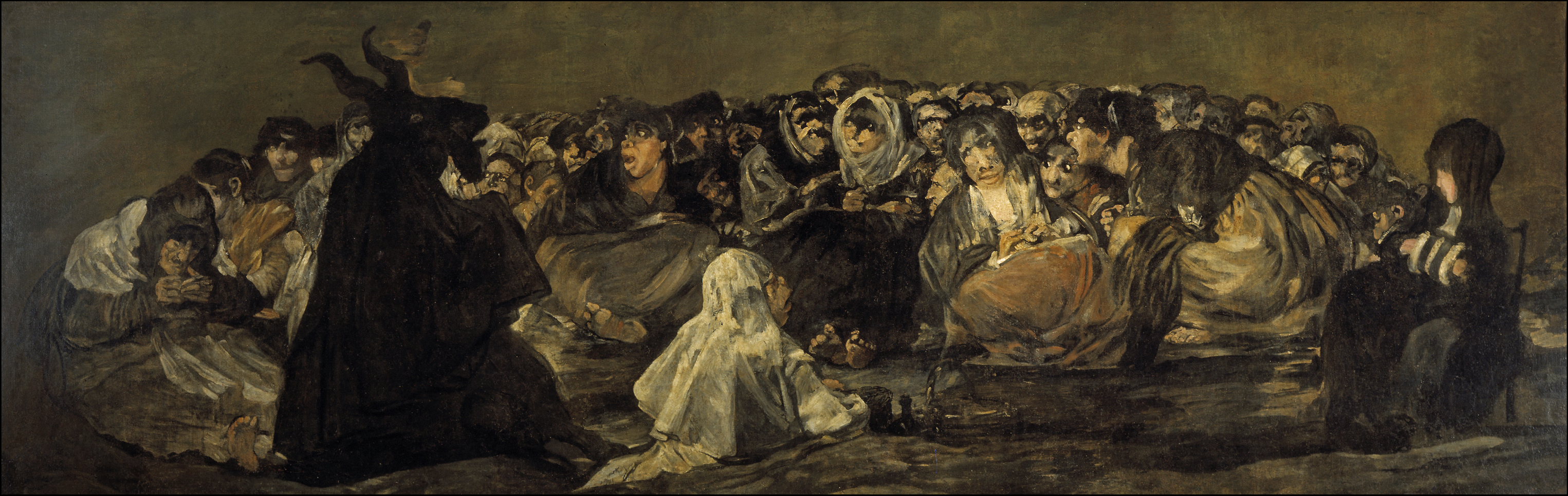
In the Cypher System, a type is the noun in your character sentence: the fundamental shape of what you are. For this setting, types carry the weight of the Sanctuary’s taxonomy of the Marked, alongside the space the setting holds for those who walk among them without having made a bargain of their own.
The Sanctuary organises the Marked not by what they are but by what threshold they crossed: the shape of the Choice that made them. Five of the types name thresholds. The sixth names the absence of any crossing.
Your type is the starting point. Your focus is the verb: the specific practice, calling, or approach that sits on top of the type. The type gives the condition; the focus gives the particular history and obligation that grew from it. A Katoikos who Refuses to Stay Dead occupies different territory from a Katoikos who Speaks for the Silent Dead, even though both begin from the same structural condition.
The Character Sentence
In this setting, your character sentence takes the form:
“I am a [descriptor] [type] who [focus].”
For example: I am a Tenacious Katoikos who Refuses to Stay Dead. Or: I am a Perceptive Phosphoros who Bends Reality Through Will and Word. Or: I am a Resilient Anekletos who Navigates the Spaces Between.
The type and focus do not have to match the most obvious pairing. The Sanctuary has seen a Brimo who Mends What Has Been Broken, a Pharmakis who Hunts Those Who Prey on the Innocent, and an Enodia who Speaks for the Silent Dead. A type defines the condition. The focus defines the practice within that condition.
Available Types
The Five Marked Thresholds
- The Katoikos: Those who crossed the Ending threshold. The dead who are not done: they persist beyond the moment that should have concluded them, sustained by something that is not ordinary continuation.
- The Phosphoros: Those who crossed the Gnosis threshold. The illumined: they were shown something they could not have found, and carry the permanent alteration of that showing.
- The Brimo: Those who crossed the Force threshold. They contain something that overwhelms ordinary human limits — raw force, devastating potential, the capacity for destruction.
- The Enodia: Those who crossed the Passage threshold. The liminal: for them the crossroads was not a metaphor, and they have carried the between-space back with them.
- The Pharmakis: Those who crossed the Working threshold. The entangled: they made something happen with sufficient significance that the act constituted a crossing, and carry the accumulated debt of what they have made.
Those Who Stand With Them
- The Anekletos: The uncalled. Present without having been summoned, here without having paid. They carry no geas. This is not a lesser condition. It is a different one.
Creating a Character
Before choosing a type, put together your core character, which grants:
- 8 Might / 8 Speed / 8 Intellect
- 6 additional points to allocate among Might, Speed, and Intellect
- Capacity to take three minor / three moderate / three major wounds
- Effort: 1
- Cypher limit: 2
- Default weapon use: light weapons freely; medium and heavy weapons hindered
- Default armor use: none freely; all armor hinders physical tasks
- Two genre skills
- One additional genre skill in exchange for an inability in a genre skill
- Starting equipment
Your type adds to this foundation. The abilities, Pool points, Edge, and weapon and armor freedoms listed under each type are cumulative with your core character.
Genre Abilities
At tier 3 and tier 6, each type directs you to choose from the Sanctuary Genre Abilities list. This is a catalogue of abilities appropriate to this setting that can be accessed as your character deepens: a broader range of options than any single type or focus provides. Your GM will provide this list.
The Geas Track
Each Marked type carries a Geas: an obligation, a constraint, a burden that is the structural counterpart of their power. The geas is not generic inconvenience; it has shape, tied to exactly what you are and how you came to be it. Each type’s geas is tracked on a four-state track:
- State 0: Settled — the Marked functions normally
- State 1: Stirring — the edges of the condition begin to show
- State 2: Rising — the geas is actively present; capabilities and costs shift
- State 3: Breaking — the geas has its say for one scene
Each type specifies its own trigger (what advances the track), its own consequences per state, and its own method of relief.
The Anekletos carries no geas and maintains no track.
On Overlap
Because this setting is built around the interaction of type and focus, some types and some foci will cover adjacent territory. The type gives the condition; the focus gives the practice that grew from it. Where a type and a focus give the same ability by name, do not take it twice: replace the duplicate focus ability with another ability from the same focus at the same tier or lower, chosen with your GM.
Further Reading
- The Axiomata: the Sanctuary’s foundational framework, including the philosophy behind the Choice and the Geas
- Character Foci: the verb half of the character sentence
- The Core Character: character creation baseline